
Systematic evaluation methodology designed to capture complete technical data for solar installation planning.
The inspection process begins when you contact Nexo Ibero with your property address and basic roof information. We discuss roof type, approximate size, building age, and any known concerns. This preliminary information helps us prepare appropriate equipment and allocate sufficient time for thorough assessment.
Inspection scheduling considers weather conditions, as accurate measurements require clear visibility and safe roof access. We typically schedule 2-3 hours for complete residential roof assessment, longer for commercial properties or complex roof configurations. The scheduled time includes roof access, measurement activities, and preliminary discussion of observations.

Our technician arrives at the scheduled time with calibrated measurement instruments and safety equipment. The assessment begins with visual inspection from ground level to identify obvious obstacles, structural concerns, or access challenges. Roof access follows, using appropriate safety measures including harnesses when required.
On-roof evaluation includes structural condition observation, material assessment, identification of penetrations and obstacles, waterproofing system inspection, and shadow pattern documentation throughout the inspection period. The technician photographs all relevant conditions and takes detailed notes of observations that will inform the technical report.

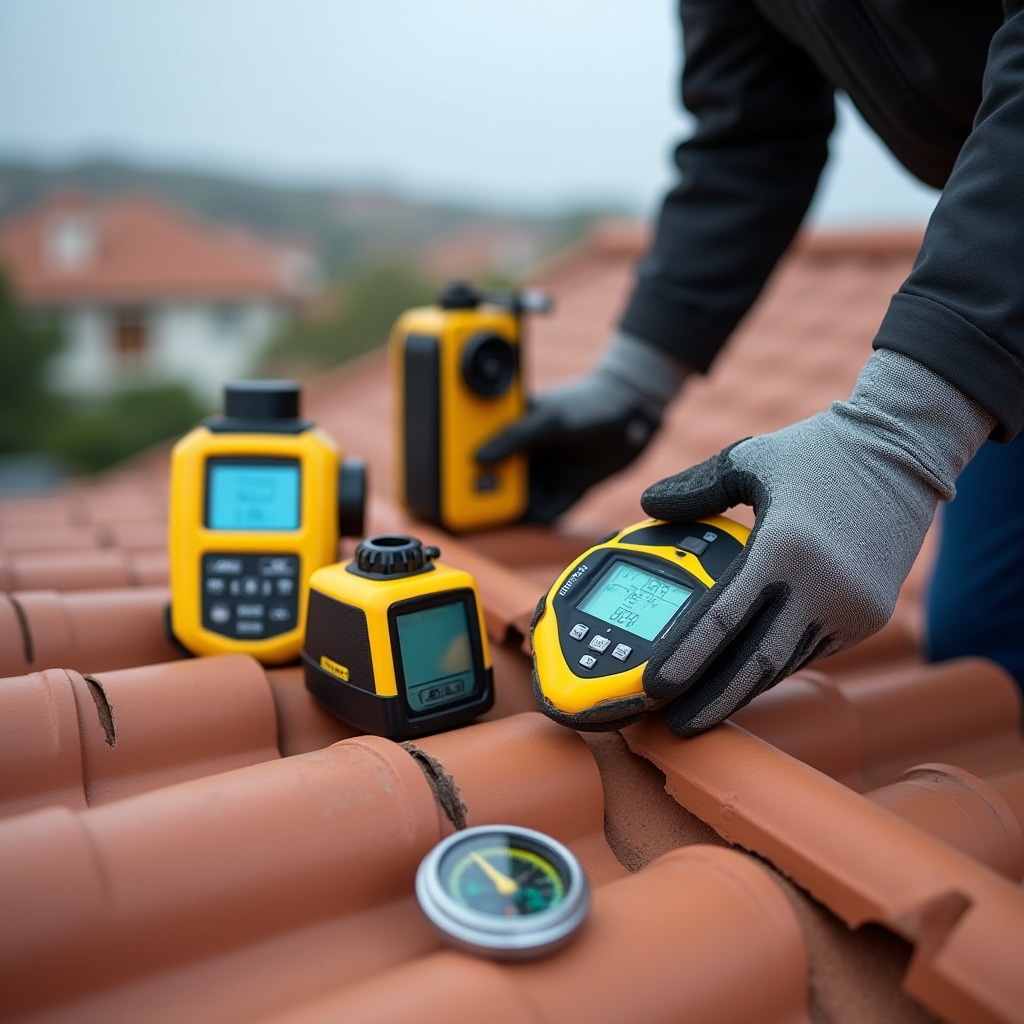
Precise measurement activities constitute the core technical work of the inspection. Digital inclinometers measure roof slope angles at multiple points to account for variations. Compass readings determine orientation relative to true south. Solar pathfinder devices document shadow patterns from surrounding structures, vegetation, and roof-mounted obstacles throughout different sun positions.
Dimensional measurements use laser distance meters for accuracy. We document overall roof dimensions, usable surface areas excluding obstacles, setback requirements from edges, and positions of penetrations including chimneys, vents, and skylights. Moisture meters check waterproofing system integrity in areas where panel mounting will penetrate or load the roof surface.
Following site inspection, our technical team compiles all measurements, observations, and photographs into a structured report. The document includes executive summary, detailed findings sections, measurement data tables, dimensional diagrams, and photographic evidence. Each section addresses specific aspects relevant to solar installation planning.
Structural observations describe roof construction type, material condition, and any concerns identified regarding load capacity. Orientation and slope data present measurements with implications for panel positioning and energy production expectations. Shadow analysis sections identify areas with reduced solar exposure. Dimensional documentation provides installers with precise surface area calculations for system sizing.

The completed technical report is delivered in digital format, typically within 3-5 business days following the site inspection. The document is provided as a PDF suitable for sharing with multiple solar installation companies. Report format follows standardized technical documentation practices, ensuring any qualified installer can interpret the data without requiring clarification.
Property owners use this report when requesting installation quotations, providing consistent baseline information to all prospective installers. This eliminates the need for each company to conduct separate site assessments, streamlining the quotation process. Installers use the documented measurements and observations for accurate system design and realistic production estimates without surprises during installation.

Each inspection covers multiple technical aspects critical to solar installation planning and system performance.
Load-bearing assessment, material condition, beam spans, and structural concerns affecting panel mounting weight.
Precise azimuth and tilt angle measurements determining optimal panel positioning and production potential.
Membrane integrity, flashing condition, and potential leak points requiring attention before installation.
Seasonal and daily shading from obstacles, trees, and adjacent structures affecting panel performance.
Accurate measurement of available space accounting for obstacles, setbacks, and maintenance access requirements.
Identification of factors requiring attention or modification before panel mounting can proceed safely.
Comprehensive technical inspection provides the data foundation for informed solar installation decisions and accurate system design.
Schedule Inspection